How to Work Out Together When One of You Is Way More Fit Than the Other
Quick Answer: The gap isn’t the problem — the format is. Shared workouts fail when “together” is defined as “identical.” Fix it by keeping the activity shared and the intensity separate: same bike ride, different gears; same 30 minutes, different targets.
Week one, you’re both excited. Week three, one of you is checking a watch at the top of the hill and the other is pretending the water break was planned.
Nobody said anything unkind. The format just quietly made one person a coach and the other a straggler.

Why does a fitness gap kill most shared workout plans?
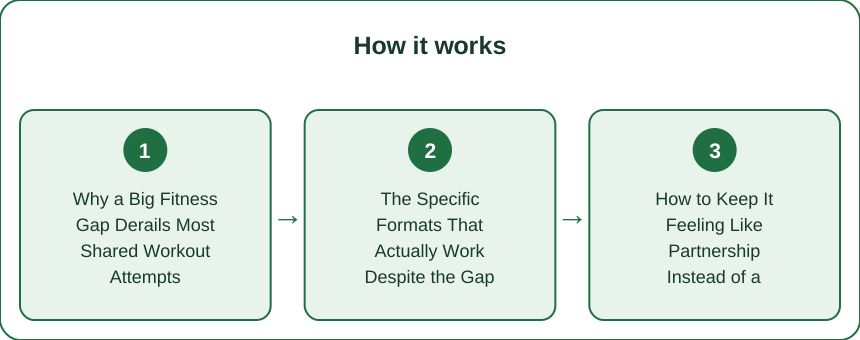
The core mistake is assuming a shared workout means an identical workout. The same session lands completely differently on two different fitness bases, so one prescription can’t serve both people.
That leaves the fitter partner with an uncomfortable choice: under-train themselves, or make the session too hard for their partner. There’s no comfortable middle, so somebody loses every time.
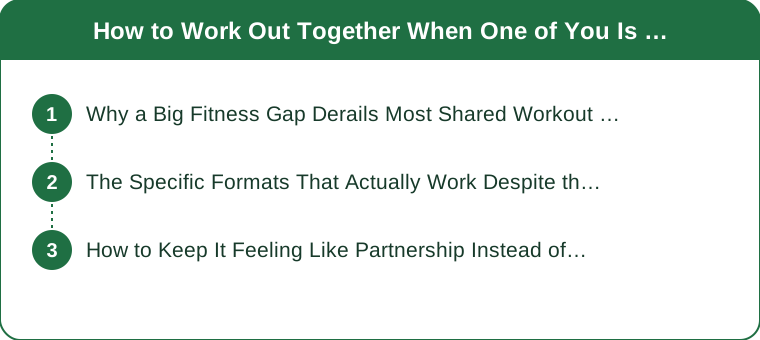
Doing the exact same exercise at the same moment also invites direct, rep-by-rep comparison — which undermines the entire reason you were exercising together in the first place. Most couple workout advice quietly assumes two people at a similar level, which is why so little of it survives contact with a real gap.
Reframe it: this is a format problem with known solutions, not evidence that working out together doesn’t work for you two.
What workout formats actually work with a big fitness gap?
Five structures that sidestep the identical-workout trap:
- Same activity, own intensity. One bike ride, one strength session — each person scaling resistance, pace, or load independently. You’re side by side; you’re just not matched.
- Time-based, not performance-based. Commit to thirty minutes together rather than a shared distance, weight, or rep target. Time accommodates any capacity difference automatically.
- Complementary roles. Structure work where each partner does something different — one anchors or holds resistance, one performs the movement. Genuinely shared, no equal fitness required.
- Alternate who leads. Trade off whose preferred activity and intensity sets the session, so the same person isn’t always the one adjusting downward.
- Shared bookends. Train mostly separately, but share the warm-up and the wind-down. You capture the connection without forcing identical training.

5 Mistakes Everyone Makes
1. Treating “together” as “the same numbers.” This is the root of nearly every failure. Shared time and shared activity are what create connection — matched output was never the point.
2. Coaching without being asked. The fitter partner offering constant form corrections turns a shared activity into a supervised session. It reads as being managed, not accompanied.
3. Setting one shared benchmark. A single numeric goal that only one of you will realistically hit builds resentment on both sides. Track each person against their own starting point.
4. Letting the fitter partner always pick the activity. If every session is their sport at their pace, the other person is permanently a guest. Rotate it.
5. Quitting the whole idea after two bad weeks. The third mistake is the one that surprises couples most — it’s rarely the fitness gap that ends the habit, it’s the scorekeeping the format accidentally created.
How do you keep it feeling like partnership?
Name the actual goal out loud. Agree explicitly that this is time together and mutual support, not equal output. Saying it removes the unspoken comparison pressure that does most of the damage.
Hold the coaching unless asked. Even accurate corrections, delivered unprompted every session, change the relationship in the room. Wait for the question.
Celebrate individual progress. The less-fit partner adding five minutes to a ride is a real win, and it doesn’t need to be measured against the other person’s ride to count. Shared goal-setting works best when the goals are parallel rather than identical.
Check in on the format every month or so. Fitness gaps shift, schedules shift, and a format that worked in spring may not fit in autumn. Revisiting it is maintenance, not criticism.
Accept imperfect over absent. A slightly awkward shared workout still beats no shared activity for a couple who wants the time. Perfect programming was never the goal here.
One honest caveat: if either of you is returning from injury, pregnancy, surgery, or a long layoff, get clearance and a starting point from a physician or physical therapist before scaling anything. A fitness gap is a programming question; a medical history is not.
FAQ
Should we just train separately instead?
Sometimes, yes — and that’s a legitimate answer, not a failure. The shared-bookend format is a good middle path: train separately, share the warm-up and cooldown, keep the ritual without forcing matched sessions.
How does the less-fit partner avoid feeling like dead weight?
Change what’s being measured. Time-based goals and individual baselines make effort visible without ranking it. It also helps enormously when the fitter partner treats the session as their easy day rather than a sacrifice.
What if our fitness levels are drifting further apart over time?
That’s normal and fixable. As levels drift, move further toward complementary roles and shared bookends and away from same-session-same-effort formats. The structure should follow the gap, not fight it.
TL;DR:
- The gap isn’t the problem — defining “together” as “identical” is.
- Five formats that work: same activity at own intensity, time-based goals, complementary roles, alternating who leads, and shared bookends around separate training.
- Name connection rather than matched output as the real goal, out loud.
- No unsolicited coaching; celebrate each person against their own baseline.
- Re-check the format every month — gaps and schedules move.
- An imperfect shared workout beats no shared workout. Get medical clearance first if either of you is coming back from injury or a long break.
Keep Reading
This article is for general informational and styling purposes only. Fit, sizing, and product availability may vary.