Shared Fitness Goals: Planning a Season of Training Together
Quick Answer: The most reliable couple workout goal is a single event, 10 to 16 weeks out, entered by both of you — and pitched at the less experienced partner’s stretch level. One 20-minute planning conversation sets the anchor, names which training days are protected for whom, and agrees what support looks like when one of you wobbles.
You planned the kitchen renovation together. You planned the trip to Portugal together, with a spreadsheet.
Fitness? Fitness happens in two separate silos that quietly compete for the same Tuesday evening, and then somebody feels resentful in March and nobody quite knows why.

What Makes a Good Couple Workout Goal?
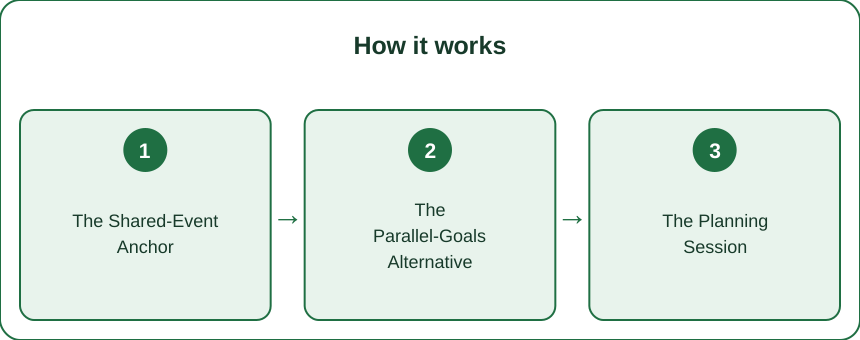
A date on a calendar that you can’t quietly renegotiate.
Shared intentions (“we should get fitter this year”) have no deadline, so they lose every scheduling fight. A shared event has a date, and that date organises four months of Tuesdays without anyone having to argue about it.
Good anchors:
- A couples’ 5K or 10K, 10–12 weeks out. The default for a reason.
- A charity ride — 25 or 50 miles gives you a real training block.
- A hiking trip that genuinely requires preparation. Rim-to-rim, a multi-day trail, anything with elevation.
- A first half-marathon if you’ve both got a base, at 16 weeks.
The one rule that matters: pitch the event at the less experienced partner’s stretch level. The marathoner joins the beginner’s first 10K, not the reverse. The stronger partner gets their own race next season — and honestly enjoys the shared one more than they expect to.
There’s a bonus effect here worth naming. A season pointed at something specific delivers more of the psychological payoff than a season of maintenance does, for both people. The anticipation is a real part of the value, the same way it is with a trip.
What If You Want Completely Different Things?
Then don’t force a shared goal. Share the infrastructure instead.
Her strength cycle, his 10K plan — but the same calendar blocks, the same gym trip, the same Sunday meal prep. The goals diverge; the logistics merge. That’s usually all a couple actually needs.
Two clauses make it work:
Protected days, named out loud. “Tuesday is her heavy day” means the household plans around it — in both directions, symmetrically. The moment it only runs one way, it stops being a shared season and becomes a favour that quietly accrues resentment.
Support without conversion. You do not have to become interested in your partner’s sport. Cheering at the finish line is a genuine contribution to their training season. Nobody is obligated to develop opinions about cadence.

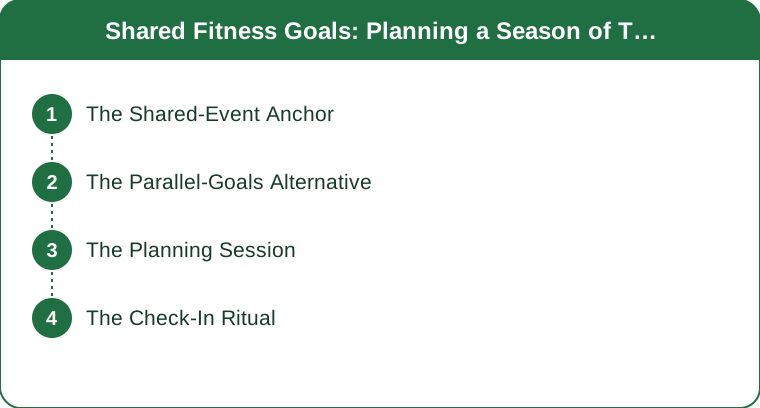
The 20-Minute Planning Session
One coffee, four questions, once a season. This is the whole system.
1. What’s the anchor? One shared event, or two parallel goals. Write down the date.
2. Which days are protected, for whom? Do this negotiation once, properly, rather than every week over dinner. A standing schedule survives busy weeks; a weekly renegotiation doesn’t survive February.
3. What’s the shared infrastructure? Who preps meals and when. How childcare works — the gym-time relay, where one of you trains while the other covers, is a completely legitimate format for parent-couples. Whether you drive together.
4. What does support look like when one of us wobbles? This is the question everyone skips and everyone needs. Some people want to be pushed. Some want patience and a rest day offered without commentary. Asking beats assuming, and it takes ninety seconds.
Twenty minutes of planning buys a season of not having the same conversation eleven times.
What Nobody Tells You About Training as a Couple
You will progress at different rates, and it will sting. Bodies adapt on their own schedules — training age, recovery, sleep, genetics. The partner improving faster should celebrate quietly. The comparison ban you’d apply at a gym applies inside your own house too.
The weekly two-minute sync is the actual load-bearing habit. Attach it to something that already exists — Sunday coffee, the drive home. “How’s the plan going, what needs changing?” That’s it. Drift gets caught at week two instead of month two.
Life-happens revisions are not failures. Injuries, work explosions, low seasons. The plan gets revised, not abandoned, and nobody gets guilt. The season serves the couple, never the other way round.
Training together every session is usually a mistake. Shared calendar, yes. Shared warm-up and post-run coffee, lovely. But being locked into the same pace for every run is how one person gets undertrained and the other gets frustrated.
Book the finish-line photo. Then schedule the next season’s coffee within a week, while you’re still feeling good about it. The cycle is the point.
Mini FAQ
How do we set fitness goals when we’re at very different fitness levels?
Anchor the shared event at the newer athlete’s stretch level, and let the stronger partner add their own volume around it. A beginner’s first 10K is still a good training block for an experienced runner if they treat it as an easy-pace social race, and it removes the pressure that ruins these plans.
How often should couples check in on their fitness goals?
Two minutes weekly, attached to an existing ritual, plus a proper 20-minute session at the start of each season. Anything more elaborate stops happening by week four. The point of the weekly sync is early detection, not deep discussion.
What if one of us loses motivation halfway through?
Revise the plan rather than defend it — drop the goal race distance, add rest weeks, or switch the anchor. Ask which kind of support they want, since pushing someone who needs patience usually backfires. A season that bends stays alive; one that doesn’t tends to end in a quiet, permanent way.
TL;DR
- One shared event, 10–16 weeks out, pitched at the less experienced partner’s level.
- If goals genuinely differ, share the infrastructure instead — calendar, meals, gym trips.
- Name protected training days once, out loud, in both directions.
- Twenty-minute planning session, four questions, once a season.
- Two-minute weekly sync catches drift early; life-happens revisions are normal.
- Different progress rates are biology, not effort — no comparisons inside the house.
Plan the season once, train it together, and get the finish-line photo.
Keep Reading
This article is for general informational and styling purposes only. Fit, sizing, and product availability may vary.