Training as a Team: How Couples Can Actually Keep Each Other Accountable
Quick Answer: Couples make the best accountability partners when they keep shared-but-individual goals, schedule workouts together in advance, and encourage instead of nag — the same setup that works with any workout buddy, just with someone who’s always around. Skip the comparison trap and the guilt trips, and shared fitness becomes a connection point instead of a source of resentment.
A partner can be the best accountability buddy you’ll ever have — or a source of nagging, guilt, and derailed goals. The difference isn’t the relationship, it’s the setup. Here’s the real accountability advantage couples have, the systems that make it work, and the pitfalls that turn shared fitness goals into shared resentment.

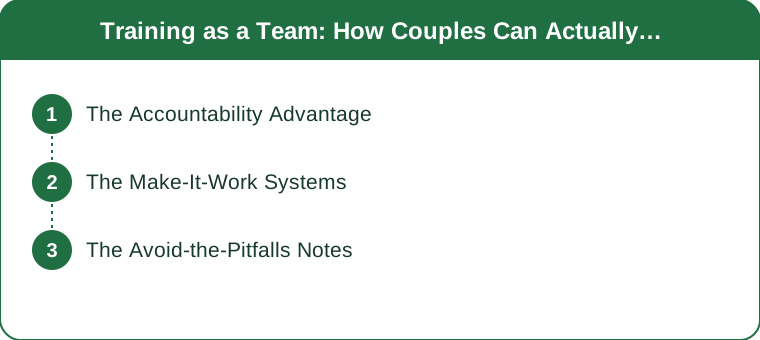
Why Are Couples Naturally Good Accountability Partners?
Living with your workout partner solves the biggest problem other accountability setups run into: they’re always there. A few things stack in your favor when your accountability partner is also your partner:
- Built-in availability — no scheduling back-and-forth with a friend across town; you’re already in the same house at the same time
- Habits reinforce each other — aligned routines are contagious in a shared environment, so one person’s consistency tends to pull the other along
- The body-double effect — simply showing up and moving together provides motivation neither of you gets working out solo
- A shared project — training toward something together builds connection the same way any joint goal does
None of this happens automatically, though. The setup determines whether couple accountability becomes a genuine advantage or a minefield — which is exactly what the next two sections are for.

How Do We Set Up Fitness Accountability as a Couple?
A few systems separate couples who make this work from couples who don’t:
- Keep goals shared-but-individual — commit to training together, but respect that your specific goals don’t have to match; forcing identical goals ignores real differences in bodies, schedules, and starting points
- Schedule it together, like a date — agreed workout times and active dates (a hike, a class, a bike ride) work far better than a vague “we should work out more”
- Play to your strengths — one person motivates, the other plans, or you trade off entirely; dividing the roles beats both of you trying to do everything
- Celebrate wins together — mark milestones as they happen instead of only noticing when something goes wrong
- Leave room for independence — solo workouts and different preferences are healthy, not a sign the “team” isn’t working
- Make it fun, not just effective — active dates and playful shared challenges beat pure obligation for keeping both people engaged long-term
Training together works best when it’s built on this kind of structure rather than good intentions alone.
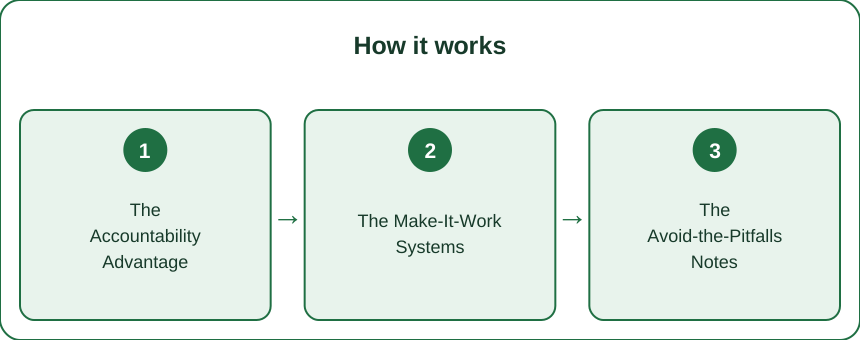
What Nobody Tells You About Couple Fitness Accountability
- Encouragement and nagging feel completely different to the person receiving them — “want to go for a walk?” lands very differently than “did you work out today?” even when the intent behind both is identical
- Comparing progress is one of the fastest ways to sour the whole arrangement — different bodies respond to the same training at different rates, and measuring one partner against the other turns a team into a competition
- A slump in one person shouldn’t stall both of you — the healthiest couples stay independently consistent, so one person’s off week doesn’t become both people’s off month
- Fitness talk can quietly become relationship talk — if “did you work out” starts feeling like a referendum on the relationship itself, that’s the moment to pause and recalibrate, not push harder
Couple Fitness Accountability FAQ
How do I support my partner’s fitness goals without nagging them?
Ask what support actually looks like to them instead of assuming — some people want a reminder text, others want to be left alone until they bring it up. The crucial line is encouraging and showing up versus policing and inducing guilt; when in doubt, offer instead of check in.
What if my partner and I are at very different fitness levels?
Respect the gap rather than trying to close it through comparison — meet each other where you actually are instead of training as if you’re the same person. Shared-but-individual goals exist specifically for this situation: same commitment, different targets.
Can fitness accountability actually hurt a relationship?
Yes, if it slides into nagging, guilt, or making affection feel conditional on workouts completed. Keeping fitness talk supportive, communicating openly about what help looks like, and separating your relationship from either partner’s results are what keep it healthy long-term.
TL;DR:
- Couples have a built-in accountability advantage: always-there availability and contagious habits
- Keep goals shared-but-individual, schedule workouts together, and divide roles to your strengths
- Encourage, don’t nag — that distinction is the whole ballgame
- Avoid comparing progress and never make love conditional on fitness results
- Stay independently consistent so one partner’s slump doesn’t derail both of you
A partner can be your best accountability buddy or a source of nagging and resentment — the setup decides which. Keep shared-but-individual goals, schedule workouts and active dates together, and celebrate wins. The crucial line: encourage, don’t nag. Respect different fitness levels, never make love conditional on fitness, communicate what support looks like, and stay independently consistent so one person’s slump doesn’t derail both.
Keep Reading
This article is for general informational and styling purposes only. Fit, sizing, and product availability may vary.