Your Questions About Sharing One Home Gym, Answered
Quick Answer: Most shared home gym conflict is about time and reset, not equipment. Agree on fixed slots rather than sharing sessions, define who resets what, and buy the small duplicate items rather than the large ones. Adjustable equipment with fast changeovers matters more than more equipment.
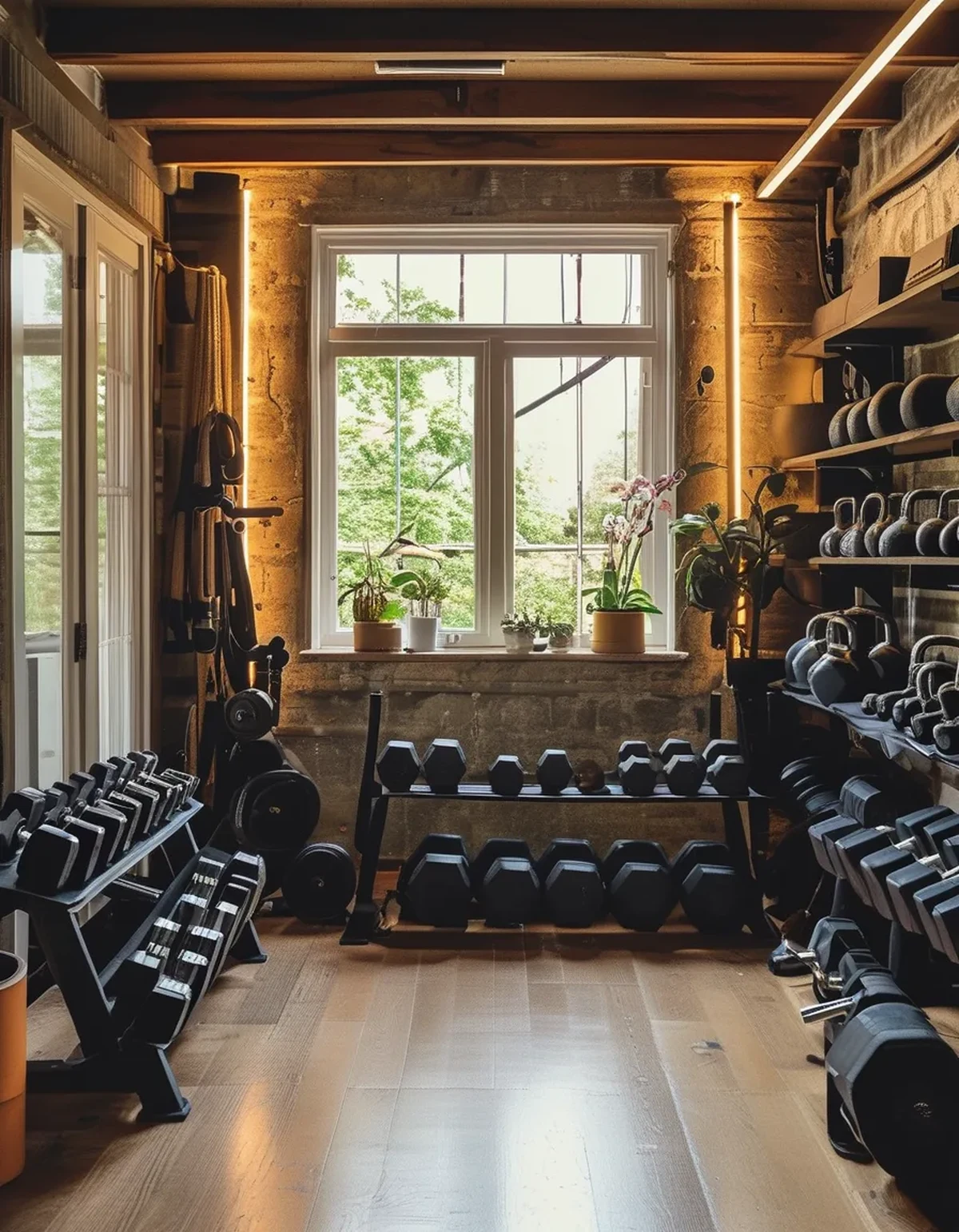
A shared home gym removes the commute and adds a negotiation. Here is what actually comes up.
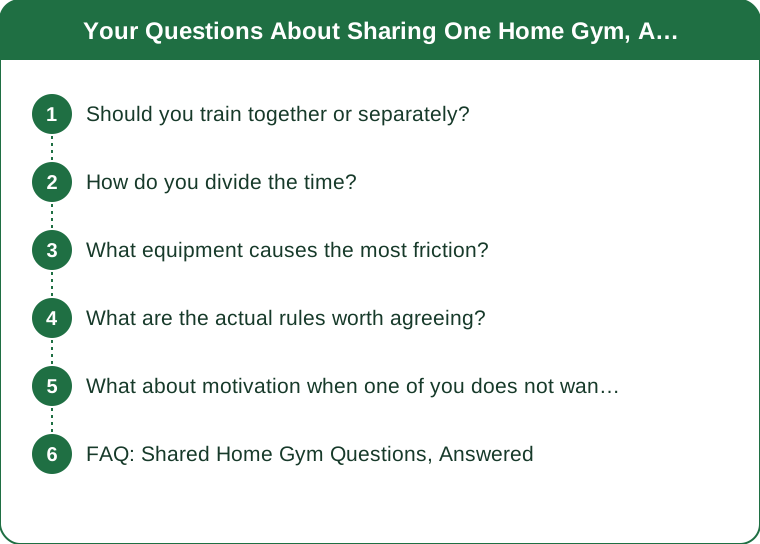
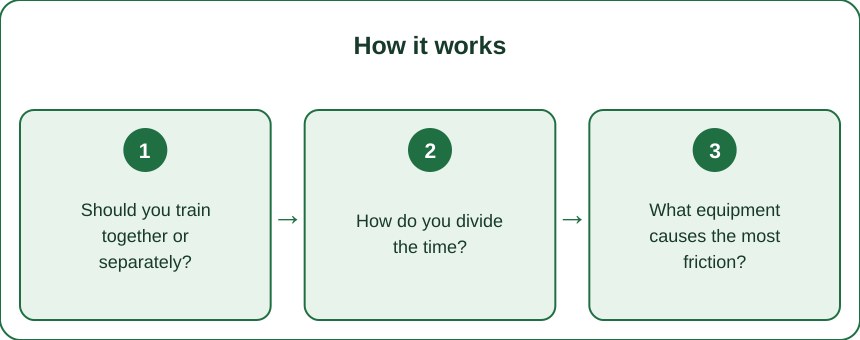
Should you train together or separately?
Is training together more efficient?
Usually less. Two people with different loads sharing a barbell spend a large fraction of the session changing plates, and the rest periods have to accommodate the slower recovery of whoever needs more. A session that takes 45 minutes alone commonly takes 70 together.
So is it not worth it?
It is worth it for adherence, which is the thing that actually determines results. Training together makes sessions happen more reliably for most couples. The trade is time efficiency for consistency, and consistency usually wins.
What is the best compromise?
Train together on days where the programmes overlap naturally — usually lower-intensity or conditioning work — and separately on days with heavy loading. Two together, two apart per week is a common pattern that works.
What if one person is much stronger?
That is the case where separate sessions save the most time. Plate changes between very different loads are the single biggest time cost in shared sessions.
How do you divide the time?
Should we book slots?
Yes, and treat them as fixed as any other appointment. Vague arrangements — whoever gets there first — are the most common cause of resentment, because the person who defers keeps deferring.
What is a workable structure?
Alternate priority by day. One person has first claim on Monday, Wednesday, Friday; the other on Tuesday, Thursday, Saturday. The person with priority chooses the time; the other works around it. Rotating weekly also works.
What about early mornings when only one of us is a morning person?
That is the easiest version of this problem — different natural times means almost no conflict. Take the win rather than trying to synchronise.
What if childcare is the constraint?
Then the slots need to be agreed with the childcare, not with each other, and written somewhere visible. This is the situation where a shared calendar entry genuinely helps, because the negotiation is happening in advance rather than at 6:45am.
What equipment causes the most friction?
What should we duplicate?
The small, cheap, personal things. Resistance bands, mats, lifting straps, a jump rope, and water bottles. These cost little and eliminate the majority of daily irritation.
What should we not duplicate?
The large expensive items. A second rack or a second set of dumbbells is rarely the right spend. Better equipment that adjusts faster beats duplicate equipment nearly every time.
What is the single best upgrade for a shared space?
Fast-adjusting equipment. Adjustable dumbbells with a quick mechanism, spring collars rather than screw collars, and a bench with a simple pin adjustment. In a shared gym, changeover speed is worth more than maximum load.
What about barbell height?
A rack with clearly numbered J-hook positions ends a surprising amount of low-grade friction. Both people know their number and stop guessing.
Is a second bar worth it?
If you both lift regularly and your loads differ substantially, a second bar is cheaper than a second rack and removes the plate-changing problem for accessory work. It is the one mid-price duplicate that usually pays off.

What are the actual rules worth agreeing?
What causes the most arguments?
Reset. Specifically, plates left on the bar and dumbbells not returned. It is trivially small and it accumulates into a genuine grievance because the next person’s session starts with tidying.
What is a fair reset rule?
Bar stripped, dumbbells racked, bench flat, floor clear. Every session, no exceptions, regardless of who is in next. Making it unconditional removes the negotiation entirely.
What about noise and music?
Agree in advance rather than in the moment. Headphones as the default when sharing the space solves it, and it is worth saying explicitly rather than assuming.
How do we handle equipment that is mid-use?
A simple convention: if you are between sets, the equipment is yours. If you have left the room, it is available. Most disputes are about the ambiguous middle, and naming the rule resolves it.
Should we share a programme?
Only if your goals genuinely align. Sharing a programme to be together usually means one person trains sub-optimally, and that shows up as frustration within a couple of months.
What about motivation when one of you does not want to be there?
Does having a partner actually improve adherence?
Generally yes. Shared accountability and a fixed social commitment both raise the probability a session happens. The effect is strongest for the less-motivated partner, which is worth knowing because it is usually the more-motivated one who proposes training together.
What if it starts feeling like pressure?
That is the failure mode. The moment one person experiences the shared gym as an obligation being enforced by the other, adherence drops and the relationship absorbs the friction. The signal to watch for is one person apologising for missed sessions.
How do you avoid that?
Separate the logistics from the encouragement. Agree slots, reset rules, and equipment as practical matters, and leave motivation entirely alone. Do not comment on missed sessions, do not track each other, and do not offer programme advice unless it is asked for. This sounds cold and is the single most protective rule in a shared setup.
Is competing with each other useful?
For some couples it works well and for others it is corrosive. The reliable version is competing on consistency, meaning sessions completed, rather than on load or performance, because consistency is the metric where different starting points do not matter.
FAQ: Shared Home Gym Questions, Answered
How much space do two people actually need?
More than one person needs, but not double. A rack, a bench, and clear floor space of roughly 8x8 feet handles two people training separately. Training simultaneously with any barbell work needs meaningfully more.
Does flooring matter more with two people?
Yes — more total use, more dropped weight, more noise transmitted through the house. Proper rubber flooring under the rack is worth prioritising in a shared setup.
What if one person is far more consistent?
Avoid making the gym the venue for that conversation. Fixed slots help, because the inconsistent person’s missed session does not disrupt anyone else’s plan.
How do you handle very different training styles?
Separate storage helps more than expected. Two labelled bins or shelves means each person’s accessories stay where they left them, and nobody spends five minutes hunting for a strap.
Is it worth a mirror?
One mirror, positioned for the lifting area, is genuinely useful for both people and cheaper than most equipment. It is usually a better purchase than another attachment.
TL;DR:
- Train together for adherence, separately for efficiency — two and two per week is a common working split.
- Book fixed slots and alternate priority by day; vague arrangements breed resentment.
- Duplicate the cheap personal items; upgrade to fast-adjusting equipment instead of buying duplicates of the expensive ones.
- Agree an unconditional reset rule — bar stripped, dumbbells racked, floor clear — before it becomes a grievance.
Nearly all of the friction in a shared home gym is logistical rather than personal, which is good news, because logistics respond to a ten-minute conversation and a written rule. Have that conversation before the first argument rather than after it.
Keep Reading
This article is for general informational and styling purposes only. Fit, sizing, and product availability may vary.