When Your Fitness Levels Drift Apart: What Actually Helps a Couple Stay Connected
Quick Answer: When fitness levels drift apart, the fix isn’t forcing the same pace — it’s choosing shared activities with individually scalable intensity (same hike, different pace; same class, different weights) and protecting some solo training time for the person who’s progressed further, without turning it into a competition.
A year ago you trained at roughly the same level. Now one of you is visibly fitter, and workouts together have started feeling like a mismatch instead of a connection point.

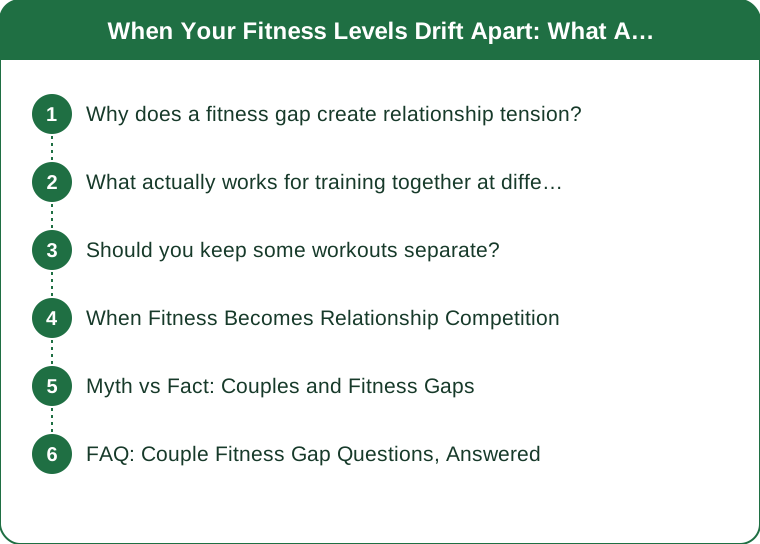
Why does a fitness gap create relationship tension?
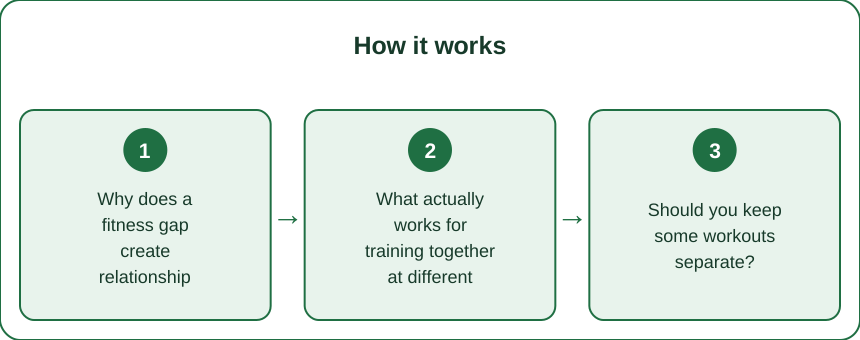
Because workouts together used to be a shared, equal activity, and now one partner is holding back or the other is straining to keep up — both feel like a loss, even though neither person did anything wrong. The tension is usually about the change in the shared experience, not about actual judgment.
What actually works for training together at different levels?
Choose activities that scale individually within the same session — a hike where pace can vary, a class where weights are chosen separately, a run where one person does intervals while the other does steady pace on the same route. Same activity, same time together, different intensity for each person.
Should you keep some workouts separate?
Yes — protecting dedicated solo training time for the more advanced partner (without guilt) prevents the fitter partner from resenting a forced slowdown, and prevents the other partner from feeling like they’re constantly being paced against. Some workouts together, some apart, works better than forcing every session to be joint.

When Fitness Becomes Relationship Competition
The gap turns into a real problem when workouts start being compared out loud — pace, weight, times — instead of just being done alongside each other. Comparison, not the gap itself, is usually what turns a fitness difference into relationship friction. Naming this pattern directly, once it starts, heads off a lot of built-up resentment.
Myth vs Fact: Couples and Fitness Gaps
Myth: A fitness gap means you’re growing apart as a couple. Fact: A gap is a normal outcome of different schedules, recovery, and interests — it says nothing about the relationship unless comparison and judgment get added on top.
Myth: The less-fit partner should just catch up to fix it. Fact: Forcing pace-matching usually backfires — scalable shared activities work far better than one partner trying to close the gap under pressure.
FAQ: Couple Fitness Gap Questions, Answered
How do we pick activities that work for both fitness levels?
Look for activities with a built-in intensity dial — hiking, cycling, and strength classes all naturally allow different paces or weights within the same session.
Is it okay to just work out separately most of the time?
Yes, especially if the gap is significant — shared workouts don’t have to be daily to keep them meaningful; even 1-2 joint sessions a week can maintain the connection.
What if my partner keeps comparing our numbers?
Name it directly and ask to shift the framing from comparison to shared time — this is usually a habit that’s easy to adjust once it’s pointed out.
TL;DR:
- A fitness gap is normal — comparison and judgment are what actually cause tension
- Choose activities that scale individually within the same shared session
- Protect some solo training time for the more advanced partner without guilt
- Name comparison out loud if it starts happening — it’s a habit, not a verdict on the relationship
The goal isn’t matching paces — it’s staying connected while each of you trains where you actually are.
Keep Reading
This article is for general informational and styling purposes only. Fit, sizing, and product availability may vary.