Is Your Workout Routine Turning Into Relationship Competition Instead of Connection?
Quick Answer: Shared fitness turns competitive when progress becomes comparative instead of individual — tracking who lifts more, runs faster, or looks ‘more fit’ rather than each person’s own baseline. The fix is usually separating tracking, not separating workouts.
You started training together because it sounded like quality time. Somewhere along the way, it started feeling like a scoreboard — who finished faster, who’s lifting heavier, whose body is changing more visibly. That shift is common, and it’s fixable without giving up working out together entirely.

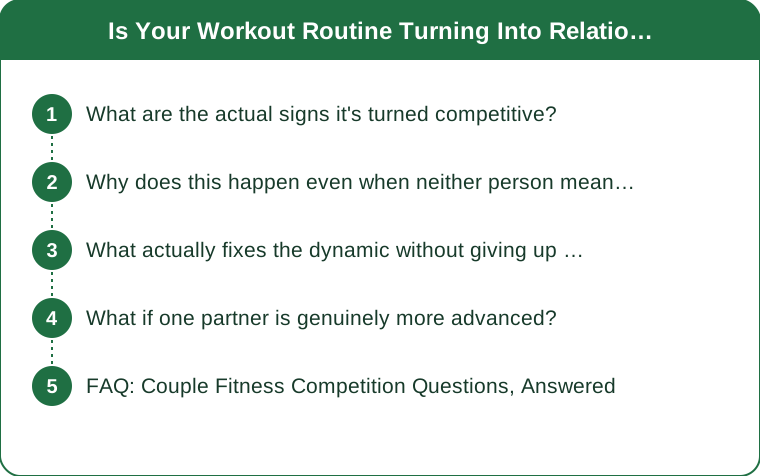
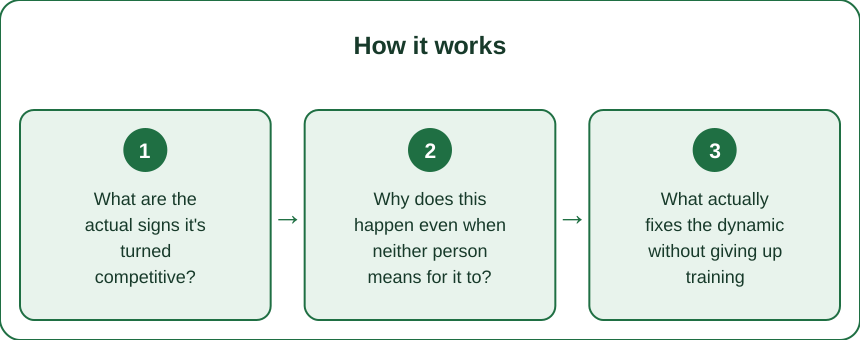
What are the actual signs it’s turned competitive?
The clearest sign is when either partner starts comparing numbers out loud — pace, weight lifted, calories burned — rather than talking about how the workout felt. A second sign: one partner feeling deflated or annoyed by the other’s progress instead of genuinely happy for them.
A third, quieter sign is one partner subtly changing their own training just to keep pace with the other, rather than following what’s actually right for their own goals and recovery.
Why does this happen even when neither person means for it to?
Shared activities naturally invite comparison — it’s a normal cognitive shortcut, not a character flaw in either partner. Fitness is especially prone to this because progress is visible and quantifiable (numbers on a screen, visible body changes) in a way that other shared activities usually aren’t.
It’s also common when one partner has more fitness experience or a different starting point — the newer or less experienced partner may feel constant pressure to catch up, even if the other person isn’t intentionally creating that pressure.

What actually fixes the dynamic without giving up training together?
Separate the tracking. Use individual fitness apps or trackers instead of a shared leaderboard-style app, and agree not to compare specific numbers out loud unless both people want to.
Redefine what ‘together’ means for the workout. Being in the same room or class counts as together even if paces, weights, or programs differ completely — togetherness doesn’t require identical performance.
Talk about it directly, once, rather than letting resentment build. A short conversation (‘I’ve noticed I compare myself when we lift together — can we track separately?’) resolves this faster than either partner silently adjusting their effort to manage the other’s feelings.
What if one partner is genuinely more advanced?
This is common and doesn’t require ending shared workouts — it usually means adjusting the shared activity’s structure. Training in the same space on different programs, or choosing shared activities where skill gaps matter less (a hike, a dance class, a walk) alongside separate structured training, often works better than trying to force identical programming.
FAQ: Couple Fitness Competition Questions, Answered
Is some friendly competition between partners actually healthy?
Light, mutually-enjoyed competition (a fun race, a shared challenge both partners opted into) can be fine — the concern is one-sided comparison that one partner didn’t sign up for and finds discouraging.
Should couples with very different fitness levels train together at all?
Yes, if the structure accounts for the gap — same space, different programs — rather than trying to match pace or weight, which usually frustrates the less experienced partner.
How do you bring this up without sounding like you’re blaming your partner?
Focus on your own experience (‘I notice I compare myself’) rather than their behavior (‘you make me feel behind’) — this usually gets a more collaborative response and less defensiveness.
TL;DR:
- Competition creeps in through comparing numbers, not through the shared activity itself
- It’s a normal, common dynamic — not a sign something’s wrong with the relationship
- Separate tracking, redefine ‘together,’ and name the pattern directly
- Different fitness levels can still train in the same space on different programs
The goal isn’t identical performance — it’s two people choosing to move in the same direction, literally or otherwise.
Keep Reading
This article is for general informational and styling purposes only. Fit, sizing, and product availability may vary.