What Do You Do When Your Partner Keeps Canceling Your Workout Plans?
Quick Answer: Repeated cancellations are usually a sign of a scheduling or motivation mismatch, not a lack of care — the fix is naming the pattern directly, separating ‘showing up together’ from ‘working out together,’ and building a backup plan that doesn’t depend on both people being available at once.
One canceled workout is nothing. The fifth one in a row starts to feel like something else entirely, even if that’s not what your partner intends, and left unaddressed it can quietly turn into a source of resentment that has nothing to do with fitness at all and everything to do with feeling deprioritized.

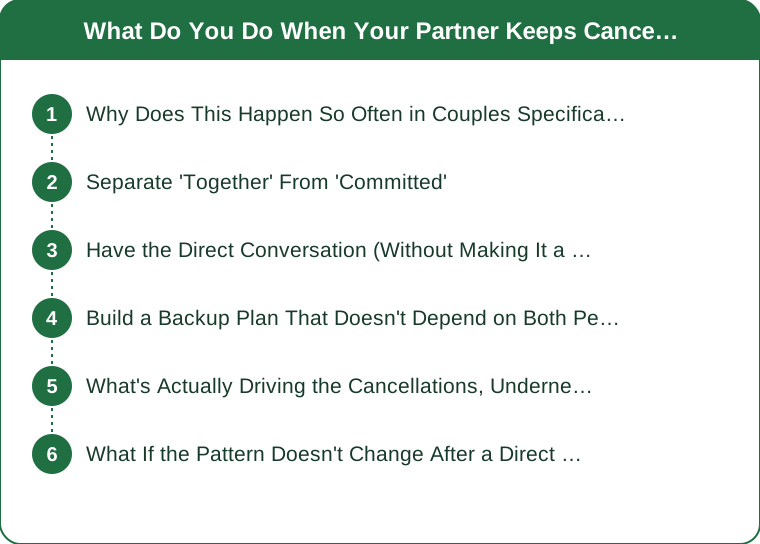
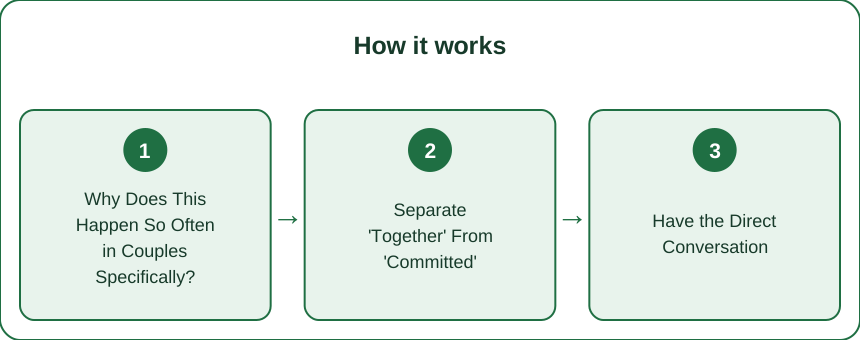
Why Does This Happen So Often in Couples Specifically?
Workout plans made as a couple carry more social pressure to actually show up than a solo plan, which paradoxically makes them easier to cancel guilt-free — ‘we’ll just go tomorrow together’ feels like less of a broken commitment than skipping a plan you made just for yourself, since the responsibility feels shared rather than fully owned by either person. Add in mismatched energy levels, work schedules, or motivation on any given day, and the shared plan becomes the first thing that gets deprioritized when either person is tired, since it’s the plan requiring the most coordination to actually execute.
Separate ‘Together’ From ‘Committed’
A useful reframe: your individual commitment to working out and your couple’s workout time don’t have to be the same commitment. If your partner cancels, that doesn’t have to mean your workout is also canceled — going solo that day, and rejoining for couple workouts on the days that do work, breaks the dependency that’s been driving the cancellations, and it also removes the resentment that builds when one person’s consistency is held hostage to the other’s schedule.
Have the Direct Conversation (Without Making It a Fight)
Naming the pattern factually — ‘we’ve planned to work out together five times this month and it’s happened once, and I want to figure out why’ — tends to land better than an accusation in the moment right after another cancellation, when emotions are already running higher than they need to be for a productive conversation. It’s worth asking directly whether the issue is scheduling, energy levels, or genuinely not enjoying the shared workout format, since each of those has a different fix, and guessing at the cause instead of asking directly often leads to solving the wrong problem entirely.

Build a Backup Plan That Doesn’t Depend on Both People
Pick one or two days a week as ‘together, if it works’ days, and separately maintain your own solo workout days that don’t require your partner’s participation at all. This removes the all-or-nothing dynamic where a single cancellation feels like the whole week’s fitness plan collapsing, and it also takes pressure off the couple’s time together, since it’s no longer the only mechanism either person has for staying consistent.
What’s Actually Driving the Cancellations, Underneath the Surface Excuse?
‘I’m too tired’ or ‘something came up’ are the most common stated reasons, but they often sit on top of a less-discussed underlying cause: one partner not actually enjoying the shared workout format, feeling self-conscious training alongside a fitter or more experienced partner, or resenting that the workout was scheduled without real input from both people. Surface-level scheduling excuses are genuinely easier to say out loud than ‘I don’t like feeling behind you at the gym,’ which is part of why the same cancellation pattern can repeat for months without the real cause ever getting named directly.
If a direct conversation about scheduling doesn’t change the pattern, it’s worth gently asking about the workout format itself specifically — whether a different type of shared activity (a class instead of free weights, a walk instead of a structured session) might remove whatever discomfort is quietly driving the avoidance.
What If the Pattern Doesn’t Change After a Direct Conversation?
Is this actually a sign of bigger relationship issues?
Not necessarily — for many couples it’s purely a scheduling or energy mismatch rather than anything deeper, but a pattern that continues after a direct, specific conversation and still goes unaddressed is worth paying more attention to, since at that point it may reflect a broader pattern of deprioritizing shared plans rather than a one-off scheduling issue.
What if my partner says they’ll commit but keeps canceling anyway?
At that point it’s worth naming the gap between the stated intention and the actual pattern specifically, and considering whether a smaller, more realistic commitment (once a week instead of four times) would actually get kept — an overambitious commitment that consistently fails can be worse for the relationship than a modest one that reliably holds.
Should I just stop inviting my partner to work out with me?
Not necessarily stop, but shift the framing — invite them without making your own workout contingent on their answer, so a ‘no’ from them doesn’t derail your own plan, which also quietly removes the pressure that may have been contributing to their cancellations in the first place.
How do I bring this up without it turning into a bigger argument about the relationship in general?
Stick specifically to the workout pattern rather than letting the conversation expand into every other frustration at once — a focused, low-stakes conversation about scheduling is much easier for both people to engage with productively than one that starts to feel like a referendum on the whole relationship.
What if I’m the one canceling and I feel guilty about it?
The same underlying fixes apply in reverse — a smaller, more honest commitment you can actually keep is better for the relationship than an ambitious one you keep breaking, and naming your own real reason (tired, self-conscious, don’t enjoy the format) gives your partner something concrete to work with instead of a vague repeated cancellation to interpret on their own.
How do we rebuild momentum after several months of a broken pattern like this?
Restart with a single low-stakes session rather than trying to jump back to the original ambitious schedule all at once — one easy, enjoyable shared workout that actually happens does more to rebuild trust in the plan than announcing a new four-times-a-week commitment that risks repeating the same failure pattern all over again.
Is it worth involving a trainer or class instructor as a neutral third party?
For some couples, yes — an outside instructor removes the dynamic of one partner feeling coached or corrected by the other, and a scheduled class with a set start time also adds external accountability that a purely self-organized plan between two people doesn’t have.
TL;DR:
- Repeated cancellations are usually about scheduling and energy mismatch, not lack of care
- Separate your personal workout commitment from the couple’s shared workout time
- Name the pattern directly and factually rather than after a fresh cancellation
- Keep a backup solo plan so one person’s cancellation doesn’t take down the whole week
- A smaller, realistic shared commitment that actually gets kept beats an ambitious one that keeps failing
The goal isn’t guilting your partner into showing up more — it’s building a system where your own consistency doesn’t depend on someone else’s calendar, while still leaving room for the shared time to work when it actually does.
Keep Reading
This article is for general informational and styling purposes only. Fit, sizing, and product availability may vary.