How Couples in Long-Distance Relationships Actually Keep Each Other Accountable to Fitness Goals
A shared gym session isn’t possible when your partner is in a different city or country, but that doesn’t mean fitness accountability has to disappear from the relationship — it just has to look different, and a surprising number of long-distance couples have built systems that work better than expected.

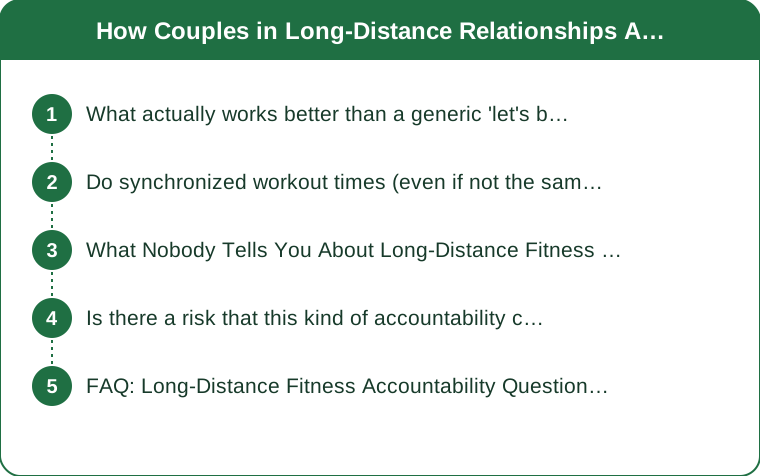
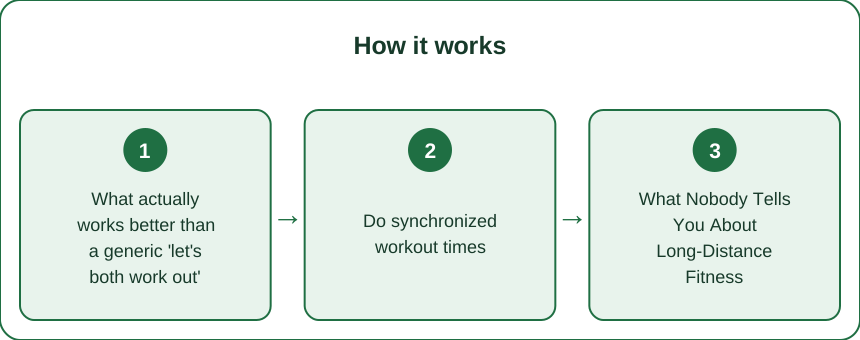
What actually works better than a generic ‘let’s both work out’ agreement?
A shared tracking method — a fitness app streak, a shared spreadsheet, or a simple daily text confirming the workout happened — tends to work significantly better than a vague verbal commitment, since long-distance accountability needs a visible, low-effort way to check in that doesn’t require scheduling a call every time.
Couples who specify exactly what ‘checking in’ looks like (a photo, an emoji, a one-word text) tend to sustain it longer than those relying on remembering to bring it up during regular conversations.
Do synchronized workout times (even if not the same workout) actually help?
Yes — setting a shared window (for example, both committing to exercise between 6-8pm their respective time zones) creates a sense of doing it ‘together’ even across distance and time zone differences, which several couples describe as more motivating than an unscheduled ‘sometime today’ arrangement.
This doesn’t require the same workout or even a live video connection — the shared time window itself is often what provides the accountability effect.

What Nobody Tells You About Long-Distance Fitness Accountability
Nobody tells you that video-call workouts sound appealing but rarely stick — time zone differences and schedule friction usually make async check-ins (photos, texts, app streaks) more sustainable long term.
Nobody tells you that mismatched fitness levels matter less in long-distance accountability than in in-person couple workouts, since you’re not directly comparing reps or pace in the same room.
Nobody tells you that accountability can slip quietly without an in-person workout partner physically waiting for you, which is why an explicit, specific check-in method matters more than it would for a couple training together.
Is there a risk that this kind of accountability creates guilt or pressure instead of support?
Yes, if the check-in becomes about reporting a failure rather than mutual encouragement — couples who frame missed days as normal and keep the tone supportive rather than tracking-for-guilt tend to sustain the habit much longer than those who treat a missed check-in as a relationship-level disappointment.
Setting an explicit agreement upfront about how missed days will be handled (no judgment, just pick back up) tends to prevent the accountability system from becoming a source of tension instead of support.
FAQ: Long-Distance Fitness Accountability Questions, Answered
Does a shared fitness app subscription actually help with accountability?
Some couples find a shared app (with visible streaks or activity feeds) genuinely helpful, though the accountability effect comes more from the visibility and consistency than the specific app chosen.
Should long-distance couples try to do the exact same workout program?
Not necessarily — matching the accountability structure (check-in method, timing) matters more than matching the actual workout content, especially with different equipment access or fitness levels.
What’s a realistic way to handle a time zone difference of many hours?
Async check-ins (a photo or text sent whenever the workout happens, without requiring a live simultaneous session) tend to work better across large time zone gaps than trying to sync live.
TL;DR:
- A specific, low-effort check-in method (photo, streak, one-word text) works better than a vague verbal agreement
- A shared time window can create a sense of togetherness even without a live connection
- Async check-ins tend to be more sustainable long-term than scheduled video-call workouts
- Keeping the tone supportive rather than guilt-based prevents accountability from becoming relationship friction
Distance changes the format, but the core of fitness accountability — a simple, consistent way to show up for each other — still works.
Keep Reading
This article is for general informational and styling purposes only. Fit, sizing, and product availability may vary.